
Visit Boden

Summer at First Camp Boden - More satisfied guests

Save to planner(0)
Please login to bookmark Close

The campsite in Boden is a central part of the summer tourism industry. Both Swedish and international guests come here to experience the nature, the community and the proximity to Boden city center. We have met Leif Larsson, destination manager and Jennie Svensson, reception manager at First Camp Boden, to hear how the summer of 2025 has been.

A season with more satisfied guests

The summer started a little nervously with fewer pre-bookings than usual, but the result was still successful.

"We were a little worried at the beginning, but it was a really good summer with more satisfied guests than in previous years," says Jennie Svensson, reception manager at First Camp in Boden.

The fact that guests leave the campsite with positive experiences is something the team is particularly proud of. Satisfied visitors not only mean returning guests, but also strengthen Boden as a destination. The stable occupancy and the nice weather also meant that the other offers, such as the outdoor pool, were very popular.
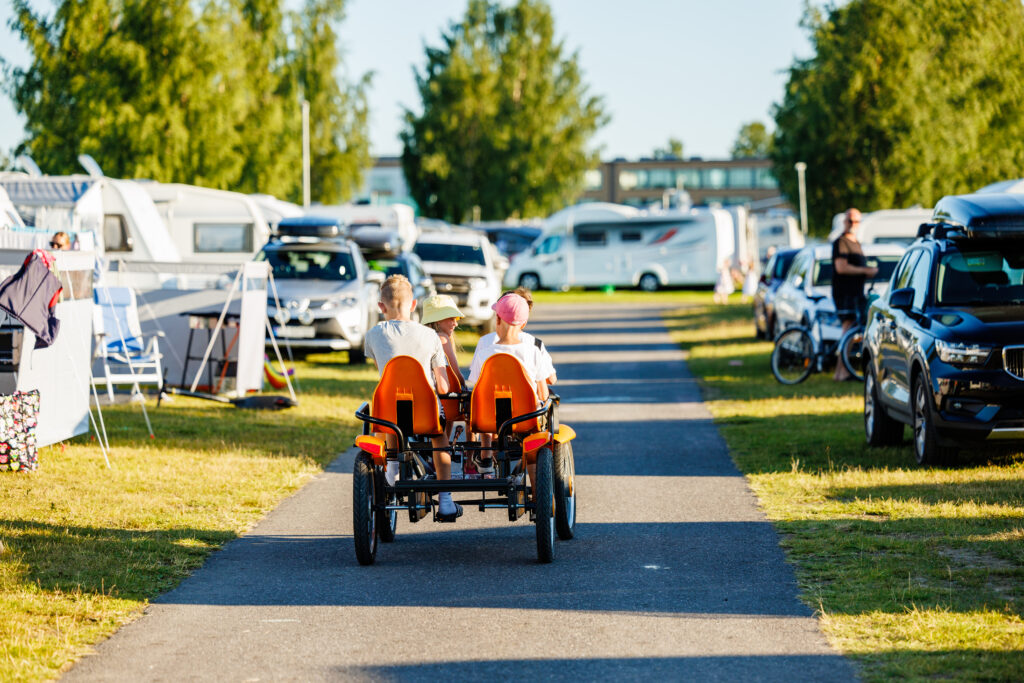
Photo: Mats Engfors

Norwegian guests - an important market

Norwegian guests remain one of the campsite's most important target groups. In January-June 2025 alone, 37,067 Norwegian guest nights were registered at the campsite.

"We definitely believe that the efforts towards the Norwegian market are making a difference. We will continue to be visible in Northern Norway - it's our biggest market and we want to be the obvious choice. We were together with Visit Boden at the Lions Motorhome and Caravan Fair in Northern Norway and wemet some of the people we met during the summer " - says Leif Larsson.

Visit Boden has also invested in advertising in both northern Norway and northern Finland.

"This is the second year in a row that we are doing targeted marketing there. Norwegian guests are an incredibly important market for our restaurants and shops in the city center. A big advantage of camping in Boden is precisely the proximity to the center. As Leif mentioned, we participated together with First Camp at the fair in Northern Norway and experienced a great interest. It is important that we continue to nurture the relationship with the Norwegian market, so that Boden remains an obvious choice for their trips." - says Alvina Pettersson, Business Developer at Visit Boden.


Families, retirees and international guests

Families and retirees are still the main target groups, but more and more international guests are finding their way here.

"We have had more Germans and French this summer " - says Jennie Svensson, Reception Manager

At the same time, new trends in guest travel are emerging. Shorter stays and more people traveling by motorhome and van are becoming more common.

New concepts and pride in staff

One of the summer's innovations was the bistro's buffet evenings and a new show concept with entertainment, which has been appreciated not least by Norwegian families with children.

"What I am most proud of are my colleagues. Jenny and Jocke have taken great responsibility this summer and that means a lot " - says Leif Larsson.

The campsite has also invested in a new outdoor gym that combines exercise with a playground environment for both young and old.
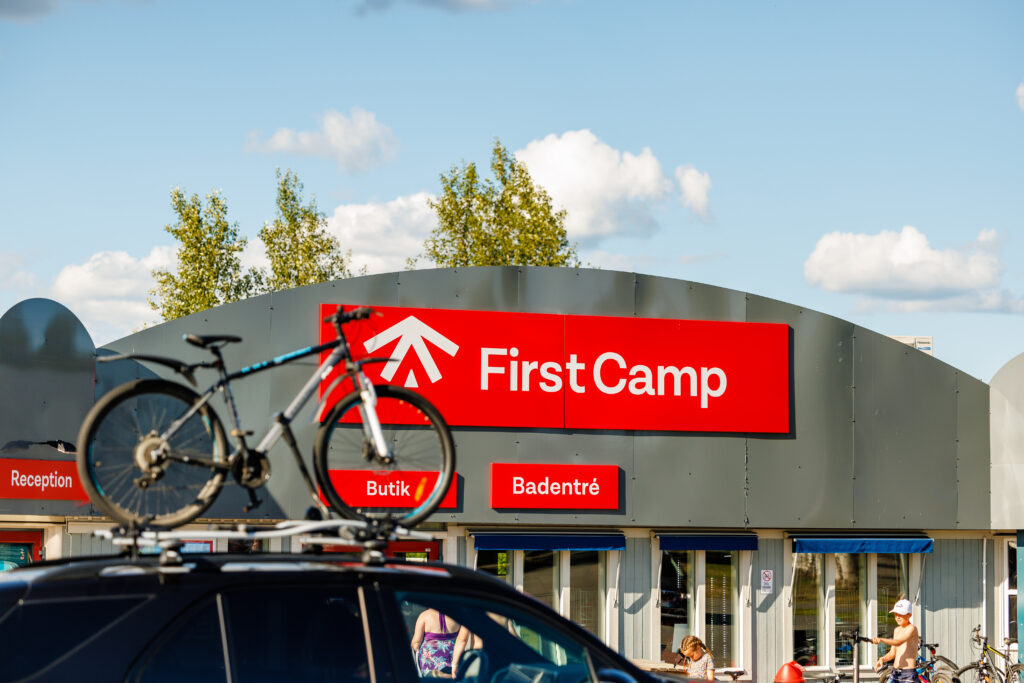
Photo: Mats Engfors

Challenges and lessons learned

The biggest challenge has been late bookings.

"Many people now wait until the last minute before booking, which can create challenges in planning. At the same time, guests have learned that it is possible to arrive spontaneously and book on the spot " - explains Jennie.


Text: Alvina Pettersson, Boden Turism / Visit Boden


Save for the planner
Please login to bookmark Close

Related content

Boden Tourism Day 2026

Are you already a tourism entrepreneur, curious about becoming one, or interested in developing partnerships with...

Euskefeurat to Boden – Book a hotel package at a great price

On February 20 & 21 at 7 p.m., Euskefeurat will visit Boden. Make your visit to Boden more comfortable –...

Storklinten gears up for a busy month

There is no shortage of activities in Storklinten Storklinten has a busy time ahead with...

Therefore, things like littering, destroying nature and long-term tent camps are violations of the right of public access.

Under the right of public access, you can go almost anywhere in nature, but not too close to houses. You may also spend one or two nights on someone else's land, pick flowers, berries and mushrooms as long as they are not protected, and swim, boat and paddle in waterways.

However, you are not allowed to pass over plots of land, gardens, plantations or fields with growing crops. You are also not allowed to drive motorized vehicles in the countryside, damage trees or bushes, or harm animals.

An important part of the right of public access is to always take all rubbish from the place you have visited. Litter destroys nature and risks making animals sick if they eat it. Rubbish is also boring to look at. If you find any, feel free to take other people's litter with you. Together we can ensure that the right of public access continues to function as it was intended.

The right of public access - what does it mean?

Friluftsfrämjandet protects the right of public access to preserve outdoor environments and make outdoor life possible for everyone. But why does the right of public access exist and what does it mean?

What is the right of public access?

Allemansrätten is a crucial prerequisite for outdoor recreation in Sweden. It allows us to hike, paddle and camp almost anywhere we want. Around 80% of the land in Sweden is owned by private individuals and companies, but thanks to the right of public access, we can move around on private land and roads. How amazing is that?

However, the right of public access is not only a right but also an obligation. When we spend time in nature, it is important to show consideration for nature, wildlife, landowners and other visitors.

The rules of the right of public access

The right of public access is included in the Constitution, but is technically not a law. However, it is surrounded by laws that set limits on what is allowed. The basic rule is not to disturb or destroy.

The right of public access - what does it mean?

Friluftsfrämjandet protects the right of public access to preserve outdoor environments and make outdoor life possible for everyone. But why does the right of public access exist and what does it mean?

What is the right of public access?

Allemansrätten is a crucial prerequisite for outdoor recreation in Sweden. It allows us to hike, paddle and camp almost anywhere we want. Around 80% of the land in Sweden is owned by private individuals and companies, but thanks to the right of public access, we can move around on private land and roads. How amazing is that?

However, the right of public access is not only a right but also an obligation. When we spend time in nature, it is important to show consideration for nature, wildlife, landowners and other visitors.

The rules of the right of public access

The right of public access is included in the Constitution, but is technically not a law. However, it is surrounded by laws that set limits on what is allowed. The basic rule is not to disturb or destroy.

Therefore, things like littering, destroying nature and long-term tent camps are violations of the right of public access.

Under the right of public access, you can go almost anywhere in nature, but not too close to houses. You may also spend one or two nights on someone else's land, pick flowers, berries and mushrooms as long as they are not protected, and swim, boat and paddle in waterways.

However, you are not allowed to pass over plots of land, gardens, plantations or fields with growing crops. You are also not allowed to drive motorized vehicles in the countryside, damage trees or bushes, or harm animals.

An important part of the right of public access is to always take all rubbish from the place you have visited. Litter destroys nature and risks making animals sick if they eat it. Rubbish is also boring to look at. If you find any, feel free to take other people's litter with you. Together we can ensure that the right of public access continues to function as it was intended.